
Choose a shared format
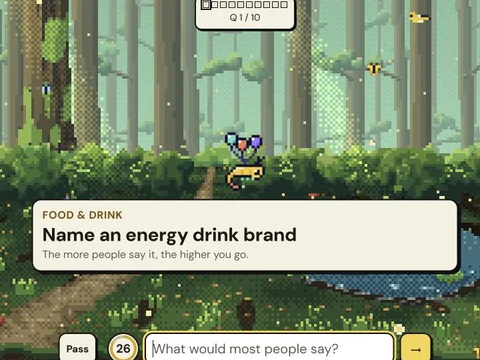
Crowdict gives you several ways to turn a solo answer game into a conversation. The Daily lets people compare scores for the same date and scoring mode. A challenge link lets friends play the same questions in their own time. A live party puts people into the same room, where they answer together and see a reveal after each round. These formats ask for different kinds of attention. Choose a challenge when schedules do not match, a party when everyone is free at once, and a Daily comparison when you want to discuss the day's shared set without coordinating a room.
In a live party, the host chooses Crowd or Rare before play. The group then faces the same prompts. Because the scoring goal is shared, a discussion afterward can focus on why people chose different answers. In Crowd, one person may be trying to predict the group's obvious response while another draws on a personal association. In Rare, different areas of knowledge become visible. The game is most interesting when people make their own choice before seeing anyone else's, so let the reveal do its work before you debate candidates.
Set expectations before the first question
Decide whether you are playing competitively or using the session as a relaxed quiz conversation. Crowdict's bands are based on prepared estimates of answer popularity rather than a live vote of your particular friends. Your group may all say one answer that the game places low, or one person may find an uncommon answer that scores highly even though everyone in the room knows it. That is normal under the game's rules. Treat the group as a source of interesting comparisons, not as the mechanism that sets the bands.
Explain the selected mode in one sentence. Crowd favors widely recalled valid answers; Rare favors less widely recalled valid answers. Then remind everyone that validity comes first. This is especially useful for a group with mixed experience. A new player may assume Rare means the strangest answer wins. A veteran can help by emphasizing that an answer must satisfy the exact prompt. Keep the introduction short so the session still feels like a game rather than a lecture.
If the party has a timer, agree to save detailed arguments for the reveal. Talking through possible answers while the clock runs can accidentally coach one player or drown out another. A good party rhythm is: read silently, submit independently, watch the reveal, discuss briefly, and move on. That rhythm lets the answers reflect each person's own reasoning and gives the group something concrete to compare afterward.
Compare answers, not only totals
A leaderboard or final total tells you who scored more, but the round-by-round choices explain why. Ask what each person noticed in the wording. Was there a date limit? Did someone interpret the category narrowly? Did a player use a local example that others had never heard of? Was a famous answer outside the category? These questions turn a result into a useful conversation. They also avoid treating one score as a judgment of someone's knowledge.
Suppose an invented practice prompt asks for a piece of playground equipment. In Crowd, several players might name the same familiar item; a different player might choose something from a playground they visited as a child. The game may rank the first item higher, but the interesting discussion is how personal memory and shared expectation diverged. In Rare, the unusual childhood item might be strategically attractive if it fits. This is a practice illustration, not a record of a Crowdict party or an assertion about a live band.
Another invented practice prompt asks for a capital in Europe. A player may supply a very famous city that is not a capital. Another may supply a smaller capital. The first player may have been optimizing popularity without confirming validity; the second may have balanced the two requirements. The group can learn more from that contrast than from the points alone. On the next question, the same people can apply a clearer two-step check.
Challenges for different schedules
A challenge link allows a friend to play the same questions later. The creator says a challenge result compares the participants and shows how they performed on that exact set. This can be more meaningful than exchanging an isolated score because the prompts and mode are aligned. When you send a link, tell friends whether you want a serious comparison or simply want to share a set of enjoyable questions. Do not spoil particular answers before they have played.
Challenge links can expose participant names, results, and answers to people with the link, according to the creator's terms. Use a public name you are comfortable sharing and think before forwarding a link outside the intended group. Guests can play without an account and may use generated nicknames. Signed-in players can choose a public name for new results on the creator's site. This independent companion portal does not operate those accounts.
If a challenge is old, the question set or its availability may change. The creator notes that older challenges may no longer open exactly as originally presented if the underlying questions change. For a friendly comparison, share and play while the link is current. If the experience differs between participants, do not force a conclusion from the totals; the shared-question premise may no longer hold.
Daily scores and leaderboards
The Daily gives everyone the same ten questions for their local date. Crowd and Rare have separate boards. That makes a score comparison more useful when you specify the date and mode. A friend who scored 1,500 in Crowd and another who scored 1,500 in Rare did not pursue the same target, even if they saw the same prompts. A score from a different date also reflects a different question set. Compare like with like, then look at the answer choices if you want to understand the gap.
The creator's leaderboard has rules for which result counts and how ties are displayed. It can refresh after a short delay rather than instantly. A personal result screen and a public board may therefore look different for a moment. The board is a way to compare eligible Daily runs, not a complete record of every practice, archive, or private session. If you are curious about a missing result, check the creator's leaderboard explanation instead of assuming the game lost all progress.
Archive replays are a different activity. They use Crowd scoring and can contribute to a past day's percentile without changing your Daily streak. Once a past board has closed, a replay does not enter its rankings. This is sensible for group use: an archive set can be a casual shared quiz, while today's leaderboard remains the current Daily competition. If you want a direct head-to-head event with friends, a challenge or party is usually clearer.
Party hosts can keep the game moving
The host's most important job is to choose the mode and make sure everyone knows it. A short explanation at the start prevents one player from trying to be common while another is trying to be rare. Then share the room code or link through a channel the group already uses. Avoid posting it publicly if the session is intended for a small group. Once everyone has joined, begin and keep discussions between rounds short enough that the game retains momentum.
When someone submits an answer that the game refuses, do not turn the party into a courtroom. The creator says answer lists can miss valid variants. Note the issue and, after play, use the official report option if appropriate. During the session, the affected player may still have time to try another response. A fair group atmosphere acknowledges that the answer bank and popularity estimates are game systems with limits, while still playing by the displayed result for that round.
For Geo, a party reveal shows country selections and the planes moving along the route. For NBA, the creator offers a friends mode where a host chooses scoring and question count and up to ten people can play. Those themed formats preserve the social appeal of seeing how different people interpret a prompt. They also have different score units from the Daily, so do not combine their totals into a single all-game ranking without explaining the scale.
A useful post-game discussion
After a group finishes, choose two or three questions to revisit. Pick one where the group converged, one where answers diverged, and one where the reveal surprised people. Ask what clue each person used, how they checked validity, and what they predicted about popularity. This makes a ten-question game feel richer without needing to dissect every round. If the group wants another session, switch modes or choose a themed game to change the kind of reasoning required.
Do not turn one person's high score into a claim that their answer was objectively “the best” in every sense. Crowd and Rare reward different choices, and the game's ranking is an estimate under a specific prompt. A lower-scoring answer can still be an interesting fact. The strongest group conversation leaves room for both the game result and the knowledge behind the response.
Quick guide to playing together
- Use a live party when everyone is available at the same time.
- Use a challenge link when friends need to play at different times.
- Compare Daily results only for the same date and mode.
- Let each player submit before discussing possible answers.
- Treat the game's popularity bands as prepared estimates, not your group's vote.
- Share names, result links, and answers with the audience you intend.
- Discuss a few surprising choices after play instead of arguing through the timer.
Start at the Daily game, or explore Crowdict Geo and Crowdict NBA for themed group questions. If someone is learning the rules, send the beginner guide before the session.
Keep exploring
Practice these ideas in the game, then compare your choices with the reveal. A scoring band is feedback for the next question, not a guarantee about a future answer.